Posts

Lila Stephan: The Beginnings of the Next Generation from 78 to 33 RPM

Image
  Lila Stephan: The Beginnings of the Next Generation from 78 to 33 rpm Lila Stephan, The Caravan 13 October 1957. Courtesy of Newpapers.com In 1952, the United States lifted its restriction on naturalized citizenship. Previous to this time, only those people classified as racially white had a path toward naturalized citizenship. Arab American music was four decades old and only a handful of the earliest Arab American musicians remained actively connected to the music industry. Historians of Arab immigration to the United States consider 1952 as a year within the second waves of Arab immigrants which spanned from 1944 to 1965. On 25 February 1952, three adolescents left Beirut en route to the United States. Although they arrived in New York, the oldest of the three, 15-year-old Suham, listed 1662 Washington Street in Boston as their future home. According to immigration documents, the youngest of the trio, Lila, was fourteen. There is no evidence that Lila expressed the slightest ...

Anthony M. Abraham: Alkawakeb Record Corporation’s Elusive Owner and Story

Image
  Anthony M. Abraham: Alkawakeb Record Corporation’s Elusive Owner and Story 78 RPM Alkawakeb record with recording by Hanan. Contains a  registered in the USA mark. Courtesy of Richard M. Breaux collection. Sometimes life drops an answer to your question in your lap and other times it is written in the stars (and the planets). Those are both true in the case of the Arab American record label Alkawakeb. For years now, the story of Alkawakeb Records, like  Maloof Phonograph Co. , A.J. Macksoud , Alamphon Records , and Arabphon Records , has eluded ethnographers and historians of Arab American cultural history and ethnomusicology. Here at Midwest Mahjar, we too, struggled to piece together the few documents that tell us about Alkawakeb Records and its owner. An internet search yielded one entry on Discogs  which notes that Alkawakeb “seems to be a US-based Lebanese record company and label releasing Lebanese and Middle Eastern music for the Arab expats in the US.” Othe...

“PRINCE” Albert Joseph: An Arab American Record Shop Dealer in Western Pennsylvania Aides Palestinian Refugees

Image
  “PRINCE” Albert Joseph: An Arab American Record Shop Dealer in Western Pennsylvania Aided Palestinian Refugees Alamphon Record with Albert Joseph dealer/seller stamp. Courtesy of Frank J. Dalton. Back in November 2020, we received a generous donation of about ninety 78-rpm Arabic records from retired dentist Joe Corey, who grew up in West Virginia. Mr. Corey contacted us because his friend, fellow church member, and labor lawyer, David Khorey, came across some of our Arab American musician profiles featured on the Arab America news website. Over dinner, and pleasant discussion about Arab American history, David asked me, “Do you know how people got their records?”   I replied, “Some people ordered records from a catalogue and had them shipped from New York. Also, dealers likely sold records as vendors at regional SOYO meetings, mahrajan, hafla, and regional Syrian-Lebanese club conventions.” He then recalled a well-known vendor from his youth in western Pennsylvania who dre...

Gabriel S. Maloof’s Syrian & Oriental Record Shop in Boston’s Syrian Neighborhood

Image
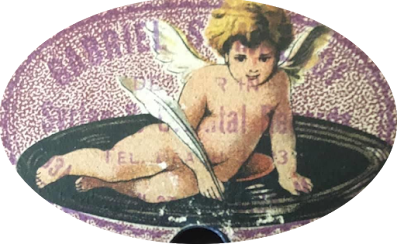
    Gabriel S. Maloof’s Syrian & Oriental Record Shop in Boston’s Syrian Neighborhood     The stamp on this label reads," Gabriel S. Maloof, Dealer in Syrian & Oriental Records,  93A Hudson Street, Boston, MA." Courtesy of Richard M. Breaux collection. Photo of Boston’s G.S. Maloof courtesy of his grandson. Much of the research and writing on Arab Americans, Arab American music, and Arab American 78 RPM records has focused on Manhattan and Brooklyn’s "Little Syria" or the Detroit/Dearborn metropolitan area. Although Boston’s "Syriantown" neighborhood has received increasing attention with respect to its restaurants, churches, and businesses, these same sources, say very little specifically about the role of music and record shops in Boston’s “Little Syria” even though we know that by the late 1920s and early 1930s there was at least one well-known record seller in Boston’s neighborhood that centered around Hudson Street, Tyler, Harrison Avenue, Oli...