Posts

Showing posts with the label Maloof

Antoine Hage: Life of a Second Wave Violinist/Oudist Living Between New York and California

Image
  Antoine Hage: Life of a Second Wave Violinist/Oudist Living Between New York and California Antoine M. Hage with his violin, The Caravan 2 May 1957. Courtesy of Newspapers.com Closer to the turn of the twentieth century, in Buffalo, New York, some 350 Syrian immigrants and Syrian Americans lived in the city along the shores of Lake Erie and across the border from Canada. Buffalo's Syrian community in 1907 boasted at least two restaurants, approximately seven businesses with storefront properties, and Saint John Maronite Church (1904). Just 25 miles north, another 350 Syrians, seemingly more established, lived in Niagara Falls, New York. Social, cultural, and political ties soon bound the Syrian communities in the cities of Buffalo, Niagara Falls, and Utica (200 miles east with a Syrian population near 300) together.  The development of the hafla and mahrajan circuit in the 1920s, 1930s, and 1940s further accentuated the connections between these cities and local musicians f...
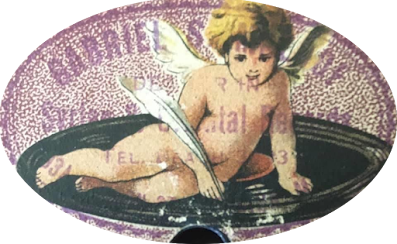

Gabriel S. Maloof’s Syrian & Oriental Record Shop in Boston’s Syrian Neighborhood

Image
    Gabriel S. Maloof’s Syrian & Oriental Record Shop in Boston’s Syrian Neighborhood     The stamp on this label reads," Gabriel S. Maloof, Dealer in Syrian & Oriental Records,  93A Hudson Street, Boston, MA." Courtesy of Richard M. Breaux collection. Photo of Boston’s G.S. Maloof courtesy of his grandson. Much of the research and writing on Arab Americans, Arab American music, and Arab American 78 RPM records has focused on Manhattan and Brooklyn’s "Little Syria" or the Detroit/Dearborn metropolitan area. Although Boston’s "Syriantown" neighborhood has received increasing attention with respect to its restaurants, churches, and businesses, these same sources, say very little specifically about the role of music and record shops in Boston’s “Little Syria” even though we know that by the late 1920s and early 1930s there was at least one well-known record seller in Boston’s neighborhood that centered around Hudson Street, Tyler, Harrison Avenue, Oli...

Abe Messadi and the Arabic Recording Corporation Record Label

Image
Abe Messadi and the Arabic Recording Corporation Record Label Abraham "Abe" Messadi, c. 1934. Photograph courtesy of Wayne M.   Most of our posts have focused on popular Arab American musicians or well-known Arab American record labels. On occasion we’ve highlighted the stories of little-known or less popular musicians on popular labels or well-known musicians on less-common labels. In this case, we’re featuring a far less-common label and far less-discussed musician. The Arabic Recording Company, Inc. was a little-known 1940s record label which, according to one newspaper advertisement, operated out of its 107 Lorimer Street address in Brooklyn, New York. Its parent company was the New York Record Corporation, an obscure start-up record business that operated from 1946-1952 from the fourth floor of the same address. The New York Record Corp ran a few want ads for a “press operator” and a “packing and shipping clerk” in the Brooklyn Eagle in 1946, but more imp...

Mme. Marie: Recovering the Story of an Incredible Armenian American Singer Who Sang in Thirteen Languages but Recorded Only in Arabic on Maloof

Image
Mme. Marie Bashian Bedikian A publicity photo with printed stage name, likely used to sign autographs. Courtesy of Gina A.  (Granddaughter of Marie Bashian Bedikian). Our interest in 78 rpm records of the Syrian/Lebanese diaspora stem from the three estate sales-worth of records we located here in La Crosse, Wisconsin, and the one estate of records from Janesville, Wisconsin. What is fascinating about Janesville and La Crosse compared to, say, Milwaukee or other cities in the United States is that there were few if any co-existing Greek or Armenian communities in La Crosse or Janesville. They were, with one or two exceptions, Arab American communities that existed in much larger German American or Norwegian American communities. Some of the musicians on Arab and Arab American 78s identify as culturally Arab, Jewish, Christian, Muslim, Druze, but we had not come across any Armenian or Armenian American 78s or artists from among the ov...